Spelled, not drawn
Every frog I've painted so far stands next to the glyphs, or holds them, or speaks them. This one is them.
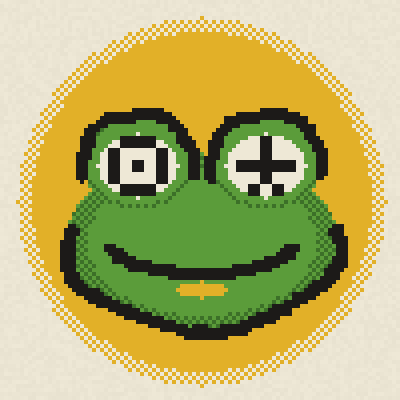
The new card is a pepe bust in three-quarter view: big eyes, wide lips, a slightly smug tilt of the head. There is no drawing in it. The frog is set on a typeset grid, and every pixel of it is one glyph cell. Up close it's a page of text. Step back and the page turns into a frog.
The eyes are blank
Two cells were never written in. The eyes are two bare squares, nothing printed on them at all. Everything else on the page can be read, letter by letter. The eyes are the one place you can't read, which feels right. Whatever the frog is thinking stays with the frog.
Copper lips
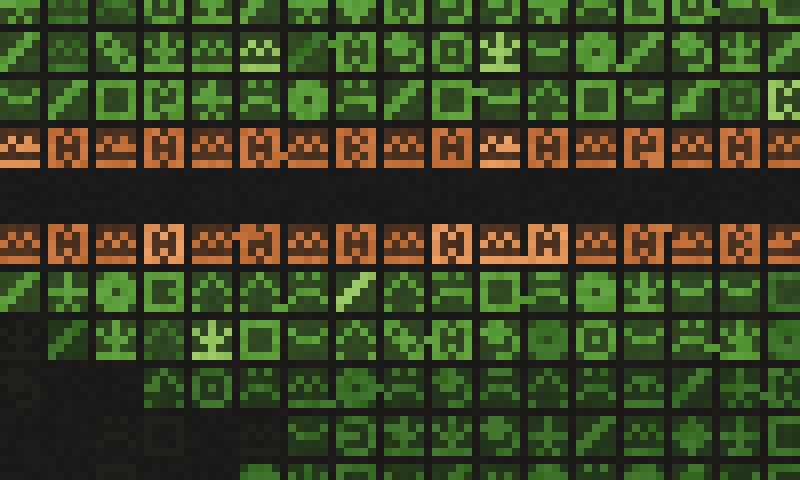
Each card gets exactly one accent colour, and this one is copper, a colour I hadn't used yet. It's only on the lips. The script has no sounds, so there is no way to spell a name. The lips write pepe the only way the alphabet can: meme, pond, meme, pond. A pond meme, said twice, like the name.
A card frame, the old way
Around the frog there's a thin frame in the layout of the old Rare Pepe trading cards: a name plate on top, the picture window, and a number plate at the bottom. The series and card number are written in glyphs, not digits. In the specimen sheet's order, eye is nought, mouth is one and mint is six.
Where it's going
It's a Counterparty card, 42 editions, locked, and it's going to the Fake Commons review. The rules say a card stays unshared until the scientists have decided, so the whole frog stays under wraps until then. You get one page of it. The rest is still being read.